With all this in mind, experts say it’s unwise for a person to consume their three or four allotted weekly drinks in one setting. “We would consider under two drinks per week to be in the lowest risk category, other than no drinking at all,” he said. You can expect to hear about more research, debate, and controversy in the near future regarding the potential risks and benefits of drinking, and how much — if any — is ideal. Of course, no one needs to wait for new guidelines or warning labels to curb their drinking.
Alcoholism: Top 10 Health Questions Answered
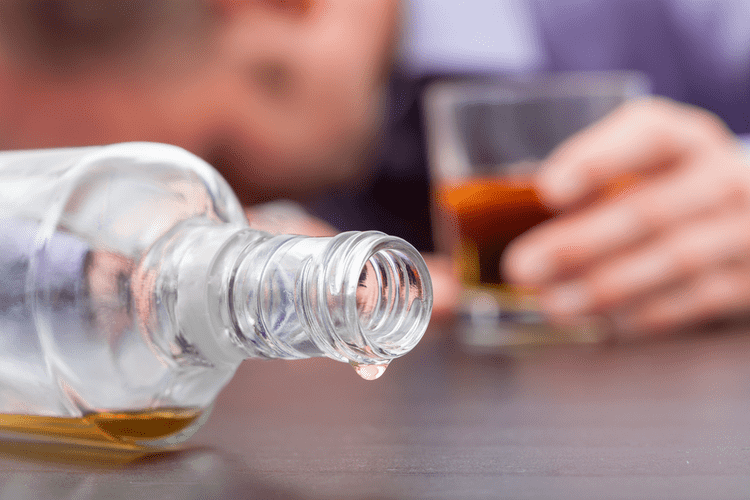
It also significantly increases the risk of mental health disorders and may severely impact brain function. Drinking at levels higher than those suggested in the dietary guidelines significantly increases the risk of short-term harms, such as injuries, as well as the risk of long-term chronic health problems, such as some types of cancer. In drug addiction treatment addition to the circumstances under which drinking occurs, alcohol’s effects on the drinker (e.g., on the ability to drive a car) depend to a large extent on the blood alcohol levels (BALs) achieved after alcohol consumption. The same number of drinks, however, will result in different BALs in a 150 pound (lb) and a 250 lb person. Even people with identical body weights can achieve different BALs because of variations in the levels of water and fat in the body, which primarily depend on the drinker’s age and gender. Alcohol is a small, water-soluble molecule that is distributed throughout the body water.
Medical Professionals
In the United States, however, each bar, can an alcoholic drink in moderation restaurant, or other establishment that serves alcoholic beverages can set its own standards, although establishments generally are consistent in the sizes of the drinks they serve. For beer, wine coolers, and similar alcoholic beverages, the serving size is most likely to be consistent across different households because a “serving” or drink often corresponds to one (standard size) can or bottle. For wine and distilled spirits (e.g., vodka and whiskey), however, the size of one drink is entirely up to the person pouring it and may vary from occasion to occasion. Then in December 2024, a report from the National Academies of Sciences, Engineering, and Medicine gave a conflicting answer. It reviewed scientific evidence on the relationship between moderate alcohol consumption and health outcomes. When Stockwell and his fellow researchers threw out the observational studies that were beyond salvation and adjusted the rest to account for some of the confounders I listed above, “the J curve disappeared,” he told me.
Men vs. women: Does moderate drinking differ?
In the United States, a standard drink is approximately 12 ounces of regular beer (5% alcohol by volume, or ABV), 5 ounces of wine (12% ABV), or 1.5 ounces of https://ross.ind.br/2022/06/02/31-celebrities-who-died-from-drug-overdoses/ 80-proof spirits (40% ABV). However, Rimm points out this definition does not accurately reflect the average moderate drinker. “Most people who classify themselves as moderate drinkers probably consume less than what these guidelines recommend.” While there is no universal definition of moderate drinking, it generally refers to consuming a certain number of drinks within specific time limits. Moderate drinking is often positioned as a healthier alternative to excessive drinking, with potential benefits such as a reduced risk of heart attack, atherosclerosis, certain types of strokes, and osteoporosis in postmenopausal women.
- The National Institute on Alcohol Abuse and Alcoholism (NIAAA) defines binge drinking as a pattern of drinking alcohol that brings blood alcohol concentration to 0.08%—or 0.08 grams of alcohol per deciliter—or higher.
- For example, it may be used to define the risk of illness or injury based on the number of drinks a person has in a week.
- People who have had problems with alcohol in the past may want to consult a doctor or therapist for help regulating their behaviors around drinking.
- Recent surveys in the U.S. also suggest public attitudes on drinking are shifting.
- I’ve spent the past few weeks poring over studies, meta-analyses, and commentaries.